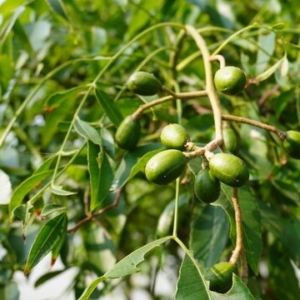
Elemi Resin: The Philippines’ Sacred Tree Gum and Its Global Renaissance
Tucked into the humid rainforests of the Philippines thrives a tree whose sap has quietly fueled centuries of craft, healing, and spirituality: the elemi tree (Canarium luzonicum). Known locally for its aromatic resin, elemi has long been a staple in local traditions—from healing balms to incense burned during ancestral rites. But in today’s global market, elemi is re-emerging not as a relic of folklore, but as a premium ingredient across sectors from luxury skincare to clean fragrances.
In an age where consumers demand transparency, naturality, and sustainability, elemi sits at the crossroads of tradition and innovation. And for brands like Maha Igorota, the opportunity to scale a locally-rooted product into an internationally competitive offering is not just a dream—it’s a strategy.
Understanding Elemi: Resin with Range
Elemi resin is tapped from mature Canarium luzonicum trees, exuding a soft, lemony-pine aroma. Chemically, it contains monoterpenes and sesquiterpenes with anti-inflammatory and antimicrobial properties—making it useful not just in traditional ointments, but now also in modern cosmeceuticals and pharmaceuticals. Its versatility has earned it comparisons to frankincense and myrrh, with global essential oil companies listing it as a rising star.
Historically exported in raw form to France for perfumery use, most elemi ends up in high-end formulations as a fixative or skin-conditioning agent. That global demand has never quite translated into prosperity for the communities harvesting it. Much of the value still lies outside the country, in branded products rather than raw material exports.
Why Now: The Global Shift Toward Natural Resins
Three overlapping market trends are setting the stage for elemi to thrive:
- The Clean Beauty Boom: As consumers shy away from synthetic fragrances and harsh chemicals, ingredients like elemi offer a compelling story—natural, wild-harvested, traceable.
- Ritual Wellness: Elemi’s history as a sacred incense aligns well with the growing appetite for ritualistic self-care and mindful consumption.
- Supply Chain Localism: Brands are moving toward vertical integration, looking for regional authenticity, ethical sourcing, and indigenous knowledge.
These trends don’t just validate elemi’s potential—they create pressure for the Philippines to rethink how it participates in the global value chain.
The Challenges of Going Global
Scaling elemi from local raw material to globally distributed product is not without challenges:
- Lack of processing infrastructure: Most elemi is exported unrefined. There are few local facilities equipped to produce cosmetic-grade or pharmaceutical-grade distillates.
- Unstable supply chains: Wild harvesting without long-term forestry planning results in inconsistent yields.
- Weak branding at source: Philippine elemi is rarely recognized as a national commodity brand. Other countries claim provenance despite the tree being endemic to the archipelago.
This is where focused product development and smart market design come in.
Building the Brand from Root to Resin
Rather than exporting raw resin, there is a growing case for brands to invest in end-to-end value creation:
- Develop proprietary elemi blends for skincare, scent diffusers, or artisanal balms.
- Introduce resin-based incense cubes or aromatherapy sticks with luxury packaging.
- Craft an origin story that connects highland harvesting to high-concept rituals.
- Use QR codes to trace resin to forest lot, showing sustainability credentials.
For Maha Igorota, elemi becomes more than a commodity—it’s a signature material, connecting the brand’s mountain-based identity with a story that resonates across wellness, ritual, and clean beauty verticals.
Sustainability as a Competitive Advantage
To build a future-facing brand, sustainability isn’t optional. Establishing fair-trade models with gatherers, training farmers in sustainable tapping, and creating forest stewardship programs all increase long-term supply and marketability.
Carbon offset opportunities also exist: reforesting with Canarium luzonicum helps biodiversity and may unlock green finance partnerships. These layers of environmental alignment are increasingly critical for EU and US retailers who require ESG compliance.
Small-Batch, High-Touch
Instead of competing on volume with industrial giants, small Philippine producers can position elemi as an artisanal, origin-specific material. By doing small-batch distillation or developing niche perfumery items, local brands retain story, identity, and control.
This is where Maha Igorota positions itself: not mass-produced, but meticulously crafted. Packaging choices, texture, scent profile—each product becomes a physical expression of Philippine highland terrain and knowledge.